Birds Sing Too
Birds Sing Too
She had two teeth—her top incisors.
When she smiled, it was one of the most beautiful things I had ever seen. Her eyes sparkled, her whole face opened, and she never made the slightest attempt to conceal her toothlessness. There was something wonderfully unguarded about her joy.
She lived with dementia, but she could still hold meaningful conversations and had very definite opinions about how our gatherings should go. Most importantly, she did not like it when I talked about sad things.
She wanted us to be happy.
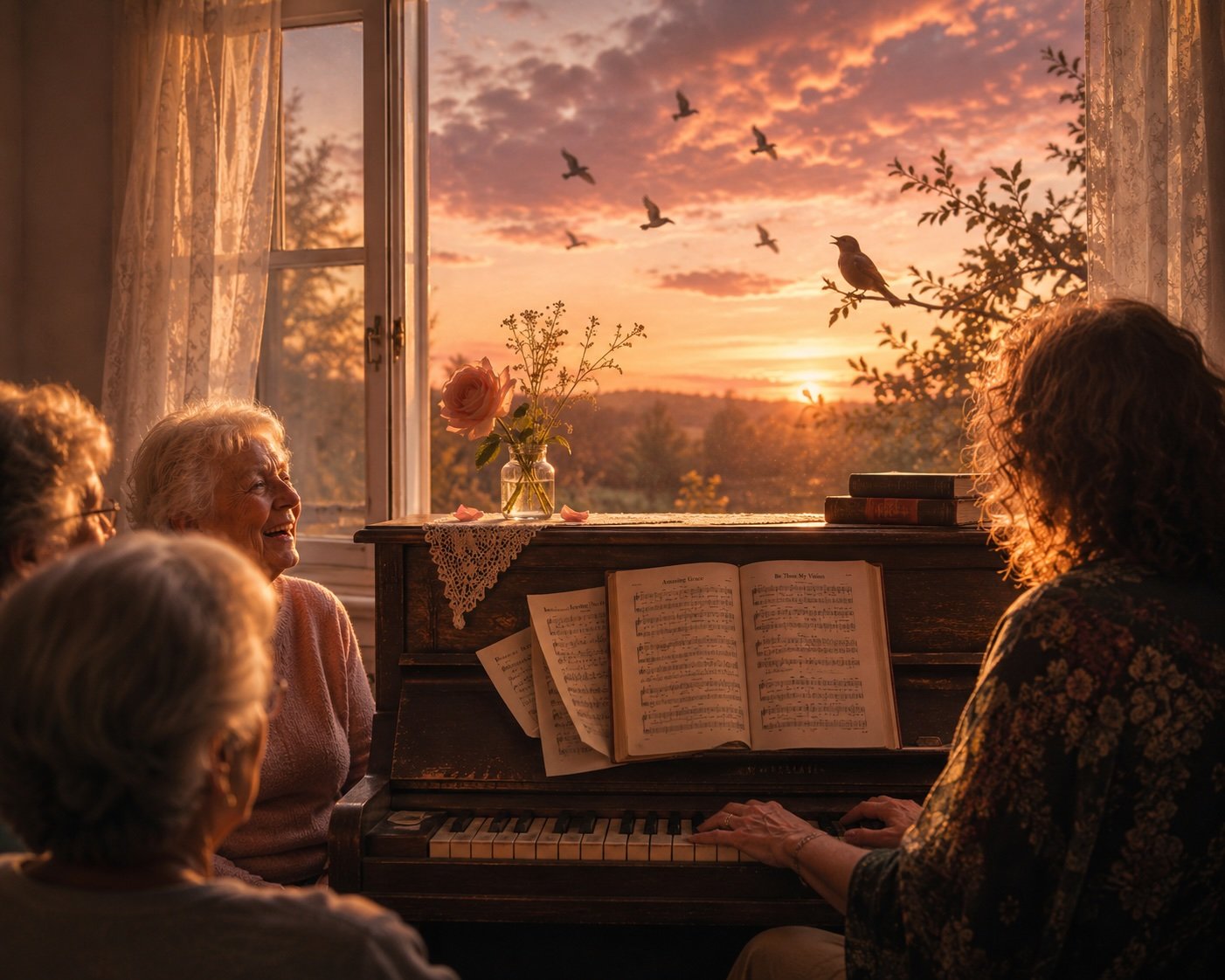
I came to know her while leading a grief support group and biweekly worship service at a nursing facility where I served as a hospice chaplain. We sang together often. Hymns, children's songs, folk songs—anything familiar enough to awaken memory or joyful enough to get us singing.
One day we sang I Wish I Knew How It Would Feel to Be Free, a song made famous by Nina Simone.
Afterward, I began musing with the group, as I often did.
We human beings have spent centuries imagining what it would be like to be a bird—to take flight, escape the weight of our lives, and simply fly away. I wondered aloud whether birds ever looked at us and wondered what it would be like to be human.
Then I said, "You know, I think birds are probably too busy being birds to wonder about being human."
She looked straight at me.
Without missing a beat, she said:
"Well, you know, birds sing too."
I was floored.
There I was trying to manufacture a metaphor about freedom, and she had quietly found the heart of it.
Perhaps freedom isn't becoming something else.
Perhaps it isn't escaping our bodies, our circumstances, our aging, our grief, or even the strange and changing landscapes of our own minds.
Perhaps there is another kind of freedom in being fully what we are.
Birds fly.
But birds sing, too.
And so did she.
She sang with two teeth and sparkling eyes. She sang while living with dementia. She sang in a nursing facility among people carrying losses I could scarcely comprehend. She did not seem particularly interested in becoming anything other than herself.
I entered that community believing part of my ministry was to bring meaning, music, and spiritual care to people approaching the final chapters of their lives.
Again and again, they reversed the roles.
They became my teachers.
She taught me something I continue to carry into hospital rooms, worship, and my own spiritual life: never mistake limitation for the absence of wisdom, and never become so preoccupied with longing for another life that you forget to sing in this one.
Sometimes the deepest theology arrives without announcement.
Sometimes it comes from a mystic with two front teeth and a magnificent grin.
And sometimes it is only four words:
Well, you know, birds sing too.